How to Reduce Snoring: Causes, Risks and Practical Tips
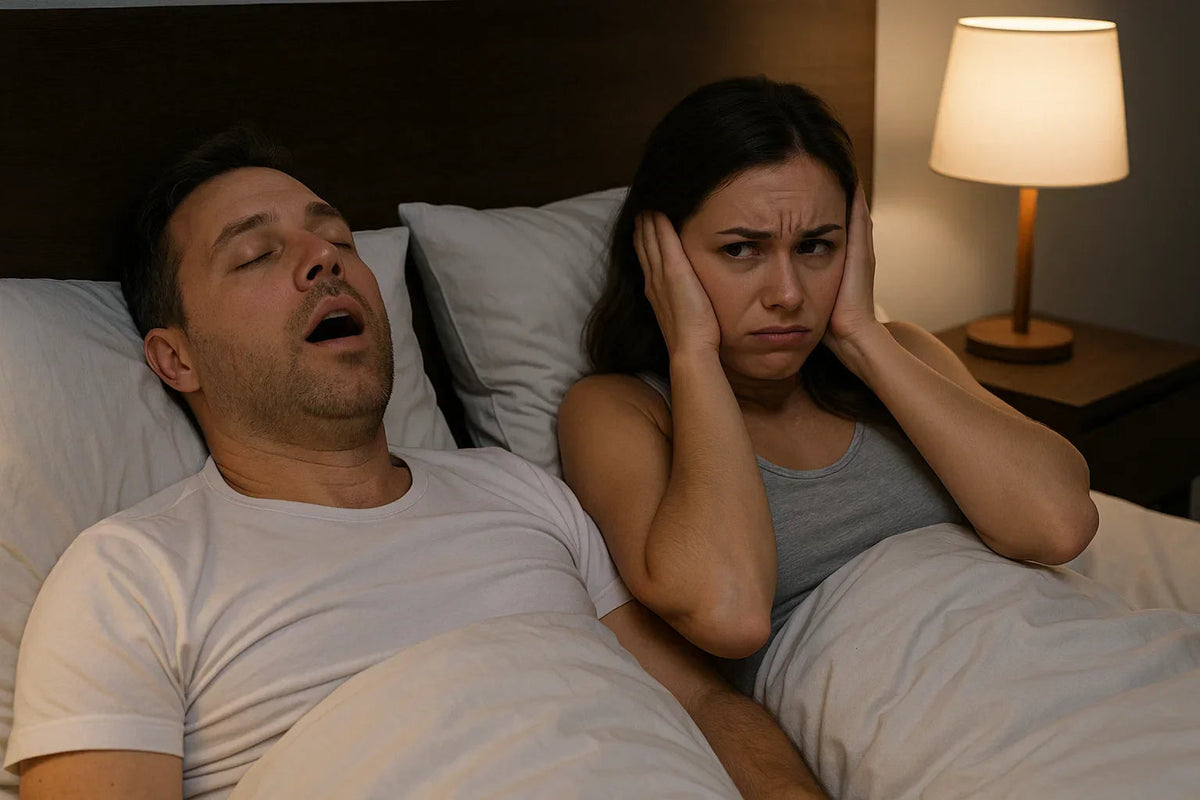
Snoring is common, but it's often an underestimated problem that affects not just the person snoring but their partner and family too. It can be a sign of a more serious health issue and can take a real toll on sleep quality. Most people treat snoring as perfectly normal, yet ignoring it for years isn't always wise: loud, persistent snoring can go hand in hand with sleep apnoea, daytime tiredness, irritability and even heart problems.
In this article we look at what causes snoring, what it can lead to, and practical steps that may help you enjoy better, quieter sleep.
What is snoring?
Snoring is the sound made when air moves through narrowed or partly blocked airways during sleep. As it does, the soft tissues in the throat vibrate, creating that familiar loud noise.
Some people snore only now and then, especially when they're tired or unwell, while others snore night after night, which can point to a more serious health problem. It's important to tell harmless snoring apart from sleep apnoea, a condition in which breathing repeatedly stops and starts during sleep. If you're not sure which applies to you, your GP is a good place to start.
Common causes of snoring
Snoring can have several causes. Among the most common are:
- Excess weight – Extra tissue around the neck can press on the airway and narrow it.
- Sleeping position – Sleeping on your back lets the tongue and soft tissues of the throat relax and fall back, which can partly block the airway.
- Blocked airways – Allergies, hay fever, a cold or a stuffy nose can push you into breathing through your mouth, which makes snoring more likely.
- Alcohol and sedatives – These relax the throat muscles and reduce control over the airway, leading to louder snoring.
- Anatomical factors – A deviated septum, enlarged tonsils or a long soft palate can physically get in the way of free airflow.
Risks linked to snoring
Snoring can be more than just an annoying noise – in some cases it can signal a more serious health issue. The main risks associated with long-term snoring include:
- Sleep apnoea – Repeated short pauses in breathing during sleep can lower oxygen levels, and sleep apnoea is linked with a higher risk of high blood pressure, heart disease and stroke. It needs proper assessment by a GP or sleep specialist.
- Poorer sleep quality – Sleep that's frequently interrupted by snoring can leave you tired, irritable and struggling to concentrate during the day.
- Heart health – Heavy, long-term snoring, particularly when it's tied to sleep apnoea, has been associated with high blood pressure, irregular heart rhythm and other heart problems.
- Strain on relationships – Constantly disturbing a partner's sleep can lead to frustration and even “sleep divorce”, where couples end up sleeping in separate rooms.
How to reduce snoring
There are plenty of ways to ease snoring. Some of the most helpful include:
- Lifestyle changes – Losing excess weight, staying active and eating well can make a noticeable difference for many people.
- Good sleep habits – Keeping a regular sleep routine and sleeping on your side can help keep your airways open.
- Nasal strips and sprays – These may help breathing feel easier when your nose is blocked. External nasal strips simply sit on the outside of the nose and gently lift the nostrils.
- Less alcohol and fewer sedatives – Avoiding them in the hours before bed can help the muscles around your airway stay firmer. If you take prescribed medication, talk to your GP before changing anything.
- Supportive pillows – A well-designed pillow can support a good head and neck position. A contour pillow with a centre dip that cradles the head can also make side sleeping more comfortable.
Myths and facts about snoring
Snoring is so common that plenty of myths have grown up around it. Let's clear up a few:
- Myth: Snoring is harmless. Fact: In some cases it can be a sign of a serious health problem, such as sleep apnoea.
- Myth: Only older people snore. Fact: Snoring can happen at any age – even in children.
- Myth: Alcohol helps you sleep better. Fact: Alcohol relaxes the throat muscles, which can make snoring worse and disrupt sleep quality.
- Myth: If someone snores, it means they're sleeping well. Fact: Snoring can be a sign of poor-quality sleep and interrupted breathing.
Conclusion
Snoring can be just an annoying habit, but it can also be a warning sign of a health problem. If loud snoring is bothering you or your partner, it's worth taking steps to ease it. Lifestyle changes, good sleep habits and, where needed, professional treatment can make a real difference to your sleep and overall health. If you share a bed, soft silicone earplugs that soften background noise can help your partner rest in the meantime.
If snoring continues or is causing real problems, don't hesitate to see your GP or a sleep specialist, who can help you find the right approach.
Frequently asked questions (FAQ)
1. How do I know if my snoring is a sign of a serious health problem?
If you wake up tired, have trouble breathing during sleep, or your partner notices loud snoring with pauses in your breathing, it's a good idea to see your GP.
2. Can changing my sleeping position help?
Yes – sleeping on your side may reduce snoring, as it helps keep the airways open.
3. What can I try at home to snore less?
Nasal strips, the right pillow, avoiding alcohol before bed and keeping to a healthy weight may all help ease snoring.
4. Can surgery help with snoring?
In some cases surgery may help, particularly when snoring is caused by an anatomical issue such as enlarged tonsils or a deviated septum. Your GP can refer you to an ear, nose and throat (ENT) specialist to talk through whether it's an option.
5. Can children snore?
Yes, children can snore, especially if they have enlarged tonsils or adenoids. If a child's snoring persists, it's best to check in with your GP.
This article is general information only and isn't a substitute for advice from your doctor or another health professional.


